Money Anxiety and the Statement You Have Been Avoiding
Money anxiety has a fix: open one bank statement and write three totals. Ten minutes turns an unknown figure into a finite one.
If there's one envelope, email, or app notification you keep swiping past, you're not alone. That low-grade dread has a name: money anxiety. It often isn't really about the number inside the statement. It's about not knowing the number yet, so your brain keeps the worry file open all day, charging interest in stress.
Here's the good news: you don't need a full financial overhaul to feel better. This tutorial walks you through opening one statement and writing down three totals in about ten minutes. That simple move turns an unlimited worry into a finite figure. We'll look at why an unopened statement feels heavier than it is, why money anxiety in 2026 is common rather than a personal failure, and why not knowing is the expensive habit. Then you'll get the exact exercise: what to gather first, the three totals to write down, how to read them without spiraling, and what changes once the figure is concrete. We'll also cover how to make this a monthly habit if you want. Start with one statement. Not all of them. Just one.
Why an Unopened Statement Feels Heavier Than It Is
You are not avoiding the money. You are avoiding the moment you find out a number you do not know yet. The banking tab stays closed. The envelope stays unopened. The not knowing does the work, and it works on you all day.
Here is why that tends to happen. An unknown figure has no edges. Your mind cannot file it away, so it keeps re-estimating, and each re-estimate usually lands a little worse than the last. A known figure, even an ugly one, stops moving. It becomes a fact with a size.
The loop is predictable. The statement arrives. You swipe the notification away. Relief lasts about a day. Then the dread comes back and brings a friend. Notice what did not change: not the balance, not the bills, only your willingness to look.
Avoiding a statement is not laziness or a character flaw. It is a very common response to the possibility of bad news, and it says nothing about whether you can handle the number. Many people develop small habits around reviewing bank statements for exactly this reason.
So here is the whole promise, and nothing more: one statement, three totals, ten minutes. No debt payoff plan. No spreadsheet. No new app. No budgeting overhaul. Today, you only have to look once. Before you open anything, it helps to know how common this dread actually is.
Money Anxiety in 2026 Is Common, Not a Personal Failure
If it feels like everyone else has this sorted, and that the dread is yours alone, the numbers disagree. A NEFE poll conducted with Verasight found 88% of U.S. adults reported some form of financial stress entering 2026, among the highest readings in NEFE's polling over recent years. U.S. adults only, not global.
In the same poll, 77% reported a financial setback in 2025, also among the highest in recent years. Feeling behind is mainstream, not an outlier.
Most setbacks were surprises, with unexpected transport costs and home repairs or maintenance among those most commonly cited. Surprises, not overspending, so a statement is news rather than a verdict on your discipline.
In the same poll, 42% named paying down debt as a 2026 resolution, 39% setting and following a budget, and 36% checking and improving their credit score. That appetite is already there.
The FRED metro series, 2021 to 2025 only and not seasonally adjusted, shows residents saying they were worse off than a year earlier falling from 34% in 2022 to 28% in 2024 and 2025. Yet NEFE's stress and setback figures stayed among the highest in years. Sentiment and the harder data do not move together, so the dread is not a forecast. If you want a clearer picture of where your money actually goes, what the spending data reveals is a good next read.
Why Not Knowing Is the Expensive Habit
If you already track your spending in an app or a spreadsheet, this piece is not for you. This is for the person with money problems they can feel but cannot yet name a number for.
Treat this as practical advice rather than a study result. Avoidance is free in the moment and it is expensive over time.
Every day without the figure is another day the worry accrues. A missed autopay, a late fee you could have sidestepped, a subscription you forgot about: the damage usually arrives as small, avoidable expenses rather than one dramatic event.
The stack feels unmanageable precisely because it has no size yet.
The distinction matters. Spending is a decision you can change once you can see it. Avoidance is a habit that hides the information you would need in order to change anything. That is why the expensive habit is not spending. It is not looking.
When you want to know what those spending numbers mean, What Your Bank Statement Spending Patterns Actually Mean (And How to Act on Them) covers it. For now: the figure you are avoiding has a size, and that size is usually smaller than the worry.
What You Need Before You Start
Here is the entire kit. Four things, and none of them cost anything.
One statement. The most recent one from your primary checking account. Not the oldest, not the whole stack, not every account you own. Scope is the technique here, not a compromise.
A way to see it. The paper copy, or the PDF your bank lets you download or emails you. You do not need a budgeting app, a spreadsheet, or a login to anything new.
Ten minutes, and somewhere to write three numbers. A notes app, a sticky note, the back of an envelope. Forced to choose, a pen and paper is better, because you cannot tab away from it.
One rule. No categorising, no judging, no fixing anything today. Totals only. If you catch yourself thinking about why a charge is there, write the number down and keep moving.
Once the numbers are down, our budgeting tips for young adults pick up from that same baseline.
That is everything you need. Next, we add the numbers.
The Exercise: One Statement, Three Totals, Ten Minutes
Here is the whole exercise.
Minutes 0 to 1: Pick the period
Take the statement you have been avoiding most. Note its date range, say the 1st to the 31st. That range is the boundary of your worry for the next nine minutes.
Minutes 2 to 4: Total money in
Add every deposit, wage, transfer in and refund from that period. Do not net anything off. One number, not a breakdown.
Minutes 5 to 7: Total money out
Add every debit, card payment, bill, transfer out and fee. Include the annoying charges and the forgotten ones, especially those. One number only. Unsure which lines count? How to read a bank statement and build a budget from it walks through each one.
Minutes 8 to 9: What is left
Subtract money out from money in. This is the number you have been avoiding, and it now has a size, a direction and a date range. These three totals are the method suggested here, not a standard anyone else endorses.
Minute 10: Stop
Do not categorise, open a second statement or build a budget in your head. Close it with the three numbers written down. If manually adding a long PDF or CSV stopped you, a tool can remove that friction, covered further down.
What the Three Totals Look Like When You Read Them
Say the statement covers a month and shows $4,200 in, $3,950 out. What is left for the period is $250. That took three additions and ten minutes, not a budgeting system.
Repeated next month, you will also see whether the gap is a blip or a pattern.
Now the limits, stated plainly. The totals do not tell you where the money went by category, whether your debt is good or bad, what you should change, or whether you are on track for anything. This is not a full budget and it should not pretend to be one. A statement total is a period, not a snapshot; if you have been watching your bank balance instead, that is a different number answering a different question.
Your figure might land smaller than you feared, roughly as expected, or worse. All three are usable. The only unusable one is the number you did not have before you started.
The number is information about a period of your life, not a verdict on your character. You can dislike it and still be someone who looked.
What Changes Once the Figure Is Concrete
Now the number has a size. A concrete number can be compared, planned against, and eventually changed. That is practical observation from doing this, not a research finding.
The bigger shift is in language. "I have money problems" is an identity you carry around all day. "This period was down £250 on £4,200 in" is a plain statement of fact with a date attached. Identity is not actionable. A dated number is.
Set expectations honestly. Relief usually arrives before any behaviour changes, and that is a fine outcome for today. Writing the numbers down is the step being asked for here, and nothing about your spending needs to change the same day you do it. If you later want to act on the figure, 10 budgeting tips that only work once you can see your real spending begin from exactly this position.
One storage rule makes the exercise worth repeating: keep the three numbers in a single place, with the date range next to them. Ten minutes of work becomes genuinely useful the moment next month's three numbers can be read beside this month's.
Finally, set a ceiling on what this can do. It removes one thing: the unknown figure.
If You Want This to Be a Monthly Habit, Not a One-Time Rescue
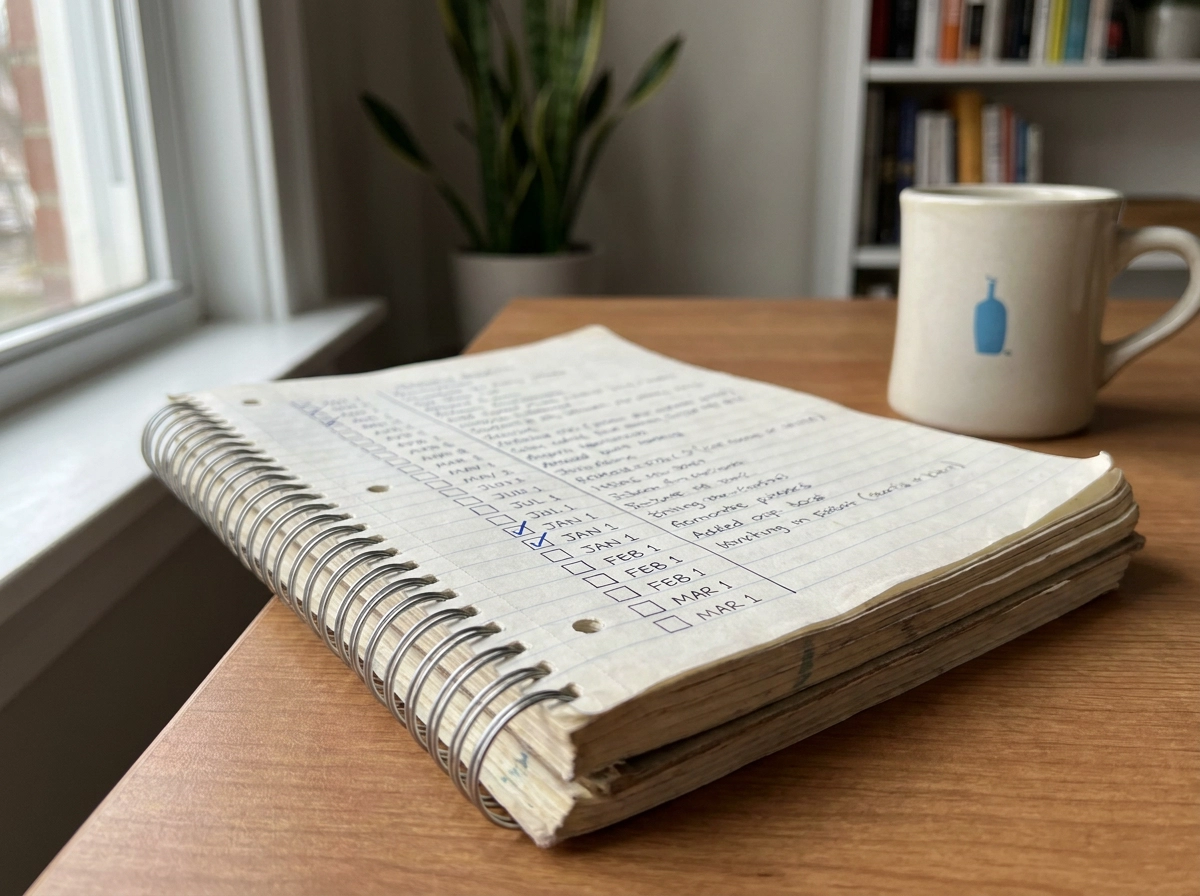
Kept together, those three numbers become more useful than a one-time rescue. Doing the exercise once proves it is survivable. Doing it every month turns a scare into a baseline you can compare against. The first time is the hardest and the least useful, because there is nothing yet to compare it to.
If adding long PDFs or CSV files by hand is what stalls you, StatementToBudget is one option. In its own words, it is an AI-powered, free tool that accepts bank statements in PDF, CSV, XLS, or OFX formats and converts them into categorized budget insights, with AI-driven spending analysis, bank statement OCR, and transaction extraction, plus budgeting guidance and tips. It removes the adding step. No tool is claimed to reduce anxiety or produce any result.
Pick one recurring trigger: payday, the first of the month, or your statement date. A trigger you do not have to remember is the difference between a habit and a good intention. For how to make it stick, see How to Build Good Money Habits Using a Monthly Statement Review.
For the first three months, define success as having looked, not as having hit a target. If the only thing that changes is that the statement gets opened, the expensive habit has already been broken.
Conclusion: Do This Once, With One Statement
A monthly habit starts with one action, not a system. Choose one statement today: the most recent one from your main current account. Leave every other statement alone for now, including the ones that feel heavier. Open it, write the three totals, and close it in ten minutes.
Even an uncomfortable number is smaller than the worry it replaces. Repeat the exercise once next month at the same trigger you chose, and count having looked as the win. That is what turns unlimited money anxiety into a finite number you can work with.